I have quite the affinity with the year 2004. It was (roughly) the start of many things I would find myself involved in at some point in my life…the Canadian-based sitcom Corner Gas, ABC’s groundbreaking drama show Lost, the ever so popular comedy show The Office, me, my now fiancée, and of course, the fan-loved film National Treasure. 3 years later, it would find itself a sequel in the form of National Treasure 2: Book of Secrets. And over 15 years after that, it would release a serialized spinoff show on Disney+, National Treasure: Edge of History, as the only continuation of the franchise. Which got cancelled after its first season.
Definitely a story behind that one.
It may surprise some fans of this movie that National Treasure was not actually well received by critics back in its day. One such critic made their point by stating, “This movie couldn’t be more stale if it’d been dug up by archaeologists,” over on Rotten Tomatoes. Now, any modern viewer will be used to chucking critic’s opinions in the bin anyways, but there is also a fair amount of regular viewers that weren’t a fan of it either, sharing a similar sentiment.
So then, why is it such a strong part of the mainstream movie culture? Many would clear it up in two words: Nicolas Cage. An infamous actor to be sure, but no one can doubt that he played the leading Benjamin Gates unlike anyone else. His performance absolutely made that movie. And its sequel. But is that all there is to it? Just an actor with a following that like to watch his silly Indiana Jones-style adventure?

Short answer: no.
There is plenty that this movie has to its storytelling that I would call at least recognizable, and personally I think still holds up very well. Let us go over it shall we?
- Actual Character Motives That Make Sense
Characters are a critical part of any good story. If your characters are garbage or annoying, most people will take their exit the first chance they get. Yet many movies and shows create a plotline with the entire goal of farming action scenes, mystery, intrigue, romance, drama, or a plethora of other things without the characters involved making any sense. It’s that standard horror trope of “why are you making these terrible decisions? You deserve the gruesome death you’re gonna find in that mansion with how incompetent you are”.
Not every scenario is going to be that extreme, but there are definitely times when you’re watching two people having sex three minutes after they met only to have some sort of post-coital drama from something someone said when you just want to give up on cinema ever being good. Or maybe that’s just me.
But stories revolving around a treasure hunt are extremely susceptible to this, because at the end of the day, you need to have characters running after treasure. The easy explanations would be the lure of great riches, or the curiosity of scholars. But there are two distinctive problems with that: first of all it is boring as all hell, as that has been done to death, secondly it just wouldn’t justify people risking their lives over it. Because obviously the story needs to have peril-a-plenty to be worth watching for the viewer.
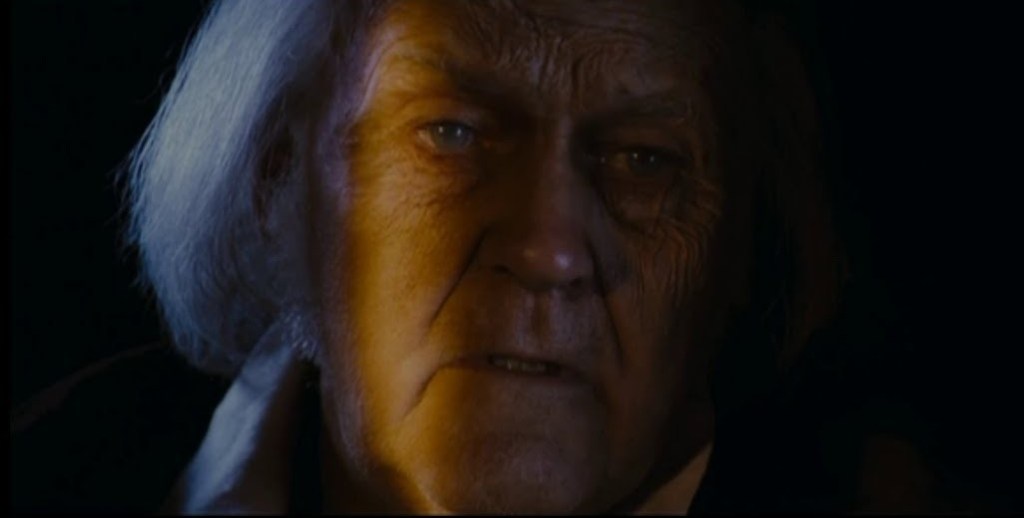
National Treasure does a phenomenal job at this, and its sequel does it even better. The aforementioned Ben Gates has grown up learning about the significance the templar treasure has had to his family, all the way back to his ancestors being sworn to protect it. And he swears that same oath as a child with his grandfather. The movie opens with this. And I think so many people miss the fact that this whole scene wasn’t just exposition or supposed to be an attention-grabbing dark attic sequence, but an explanation of ‘why‘? That is extremely important.
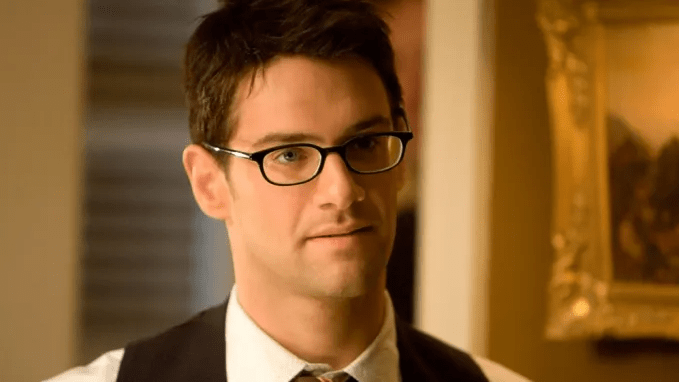
Over a fairly short period of time, we come to realize that the motivations of his sidekick, Riley Poole (shown above), is to make a name for himself, as a fresh out of college techie type of guy. As such, he is more hesitant to do some of the more daring moves throughout the story. We also find out that the eventual antagonist, Ian Howe, is in it for the money. Go figure.
Ok, so maybe he could’ve used some work but still, the main character is really where it matters most, and they definitely delivered on that front. Ben feels the need to protect the treasure like his ancestors did against those that would exploit it for nothing but wealth.
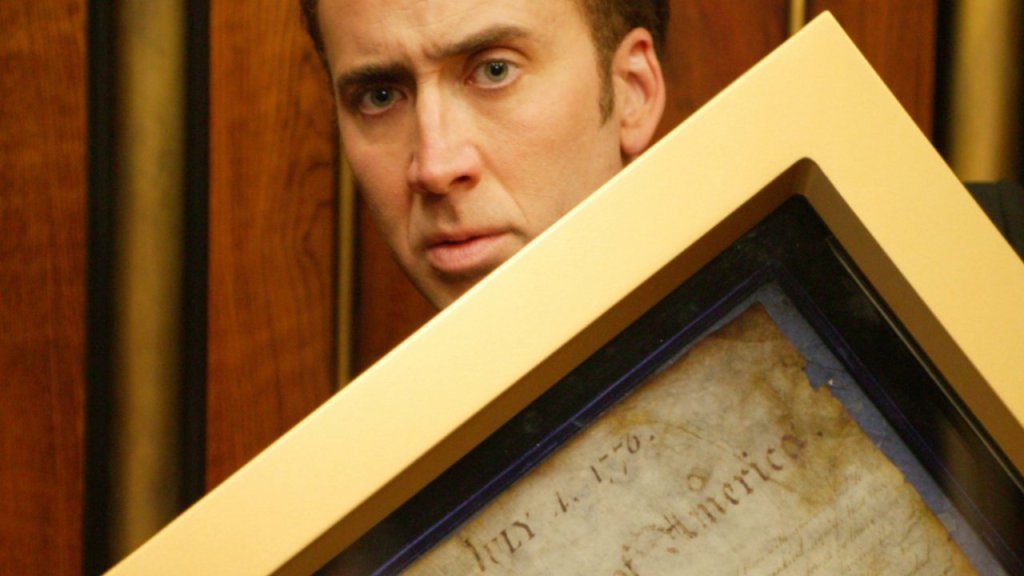
There is actually a specific line in the movie that represents this very well, when Ben doesn’t want to steal the Declaration of Independence but realizes he has to in order to protect it from Ian. “If Ian gets a hold of the Declaration he’ll destroy the document!” Thus, he develops this philosophy over the course of his plans, “Here’s to the men who did what was considered wrong, in order to do what they knew was right.”
2. Excellent Pacing and Early Sense of Stakes
As someone who has dabbled in the creation side of storytelling besides just the analysis side, I know that pacing can be a massive pain. The upshot is you want your story to start strong, with a bit of action or intrigue right from the get-go, and then follow that up with a mixture of dialogue, action, or intrigue spread somewhat evenly over the course of the rest of the story. Knowing when to spend a scene talking versus having action is essential, and you should always have some unique context for that dialogue scene when possible. A conversation while on the road somewhere so the scene keeps moving, characters figuring out what to do about an unexpected captor they have in their possession, someone initiating a seemingly innocent conversation to cause a diversion for someone else or gain someone’s trust, there’s a lot you can do. At the end of the day, it just needs to serve a distinctive purpose and naturally bring the scene somewhere more exciting smoothly.
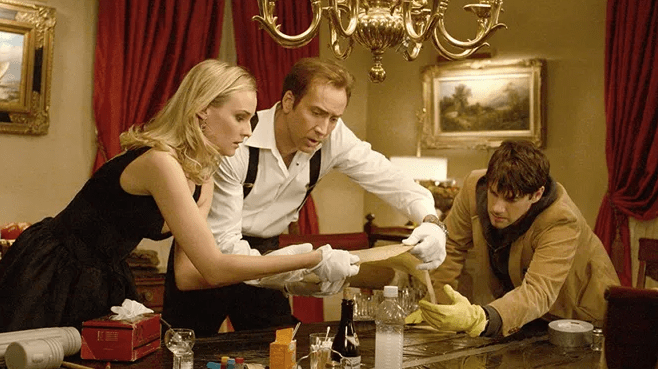
This is something that National Treasure does virtually perfectly, as anytime a dialogue scene finishes there is always another direction that is immediately apparent. For example, after Ben finishes the quote I mentioned above, while having a toast with Abigail Chase, he takes that glass from her out of a seemingly gentlemen act, only to use it to get her fingerprint so him and Riley can enact their plan to steal the Declaration. Another dialogue scene takes place directly after said theft where the audience is led to believe that Ben has lost the Declaration to Ian, where it is then revealed through an on the road dialogue scene that he actually gave Ian a fake duplicate purchased from the museum gift shop, while also exposing the fact that he used his credit card to do so, meaning that he will now be a suspect for the capital crime. That naturally leads the group to needing to develop a plan b for how to use the Declaration, as their original plan of using Ben’s apartment as a lab will no longer work.
Something else that really helps the flow of the movie is the sense of stakes established very early on. And I’m not just talking about the character motives. Ben being hunted by the national authorities while also being on a race against Ian’s vast pool of resources makes for constant pressure, meaning that every decision he makes has a lot riding on it. If it was as simple as, ‘well this treasure is important to my family and I, but I can wait a few more years to figure out the next clue’, it wouldn’t really make for a great movie.
3. Healthy Use of Historical Themes
Something that distinguishes National Treasure from some other treasure hunt plots that are out there is that it indulges in a heavy dose of actual history to enhance its story. What I mean by that is there are actual historical foundations behind ideas like the Templar Treasure, Masons that signed the Declaration, and even things like Benjamin Franklin experimenting with bifocals. The writers have made expert use of little tidbits of real history to assemble their fictional plot.
Yeah, there’s definitely a few stretches in there, such as Charles Carroll (the dude that gave the “charlotte” note to Ben’s ancestor) being a Mason, since his overtly Catholic faith would have directly contradicted the freemasonry society. But Charles was the final surviving signer of the Declaration of Independence, and honestly, most of the inaccuracies of the movie are more nitpicks like this than anything else.
Interestingly, the exact thing that adds so much immersion to the film is exactly what pushes a lot of people away from it. Some label it as a ‘highly improbable plot’ and nothing but a distraction for a couple hours. When you make a story feel like the real world, it helps pull in people like me who love to really get into plots, but it will also invite careful analysis by those that want to see what they got right and wrong about the world. As soon as you make a number of significant mistakes, the significant criticism starts.
I’ve seen this phenomena occur with the previously mentioned Lost, where the feeling of all the crazy mysteries taking place in the world we live in is exactly what pulled in such a vast audience, where even average reality show viewers were carefully analyzing every episode for story clues, until the show became more fantastical with its plot and it lost a TON of people. There’s still a lot of general frustration with it. Where does that come from? The high expectation of a fictional plot feeling like the real world.

While at the end of the day, it is up to you, dear reader, how much the movie feels like the real world, since that can be quite subjective, the use of history is nothing but a plus in my eyes.
4. Creative and Well-Timed humour
Since this movie definitely can be defined by the comedy genre, its humour is an important element to look at. And, well there’s honestly not much to say. The humour works. It’s timing is on spot, with Riley being the anchor point for most of the jokes. That’s an effective way to do it, since he serves a useful purpose throughout the film besides just being the comedic relief. I always prefer it that these characters receive some element of depth as just having a one dimensional character as the only source of humour…well you get the idea. Depth. It’s important to all aspects of a story. If you can add humour to it without sacrificing the depth of the narrative, that’s a big win.

5. A Kickass Soundtrack
Thanks, Trevor Rabin.
6. A Competent Ending
This isn’t something I thought would have to be specified, but apparently with some of the trash endings that are out there, it needs to be. Let us go over what makes a good ending shall we?
First of all, an actual conclusion. None of this ‘the ending is what we make it to be’ garbage. I have heard the rhetoric of ‘who am I as the writer to determine what the viewer should get out of my story?’ Like buddy, that is what I call either lazy writing or a massive poetic ego that is too incompetent to realize what they’re actually doing. I’m not saying that everything needs to be tied up in a neat little bow and all should be made well in the end. If your conclusion is ‘they all died, the end’, fair enough. But don’t try to make it so unclear that I need to watch a five hour analysis video in order to figure it out and then call it ‘artistic cinema’.
On the flip side, you also don’t need to shove every little detail that you resolve down the throats of the viewer. Let everything you do have its moment, and the viewers that care about it will notice. For example, throughout National Treasure 2, the central conflict between Ben and Abigail is Ben just assuming her response to his decisions and just going through with them instead of actually talking to her. But in the end of the movie, through a development of his character, he turns to Abigail to see her nod in agreement before making the decision to include their enemy’s family line with the credit of the treasure discovery, since that is all he really wanted from the treasure anyways (his character has a lot more depth than the antagonist from the first film).

Second thing important to an ending: change. We already discussed character development, but beyond just someone turning a new leaf on a particular flaw, there is also reaching a new place in one’s life, such as Ben and Abigail developing a romantic relationship by the end of the first film. And Riley finally having a name for himself at the end of the second. There is also setting change. What has changed in the world? What did our characters accomplish? Or fail to accomplish? Of course National Treasure has this easy since discovering a, well, national treasure has an inherent impact on the world, but it can be easy to forget this when crafting a conclusion. Something should change in the world.
The final point I would make about endings is that it should leave the audience with a thought or idea. Or even emotion. For example, in my last blog I talked about Oppenheimer, which has the resounding ending where Robert Oppenheimer concludes that he just destroyed the world with his work on the nuclear bomb. As in our world. Since, you know, the movie is non-fictional drama. People left the cinema with that in mind. Comparably, National Treasure is perhaps lacking on that front, but it does have that classic ‘good will triumph over evil’ theme to it, which is what a lot of stories go with, and I don’t really find anything wrong with that. It just means the movie isn’t going to be the most groundbreaking film out there. Everything can’t be an Oppenheimer.
7. A Great Sequel
I’ve already covered a few points about Book of Secrets, but I just want to highlight that the reason this 2007 continuation is so good is because it withholds everything the first movie did well and I personally think did it even better. I know a lot of fans of the first film don’t like this one as much, but I think that has a lot to do with the fact that it isn’t the first time they are experiencing this story structure rather than the movie itself being particularly flawed.
This time around Ben Gates’ incentive to track down the treasure is because it is the only way to validate their perspective on history and save his families’ name. The movie explains it much better than I ever I could in a quick sentence, so if you don’t remember all the whys, I’d recommend rewatching the film. It is also worth noting that his father is just as discouraged about the prospect of his ancestor being remembered as a villain, so he also is incentivized to help Ben and the gang throughout the story.
Riley is still struggling to make a name for himself, as he has discovered that no one remembers him from the discovery of the Templar Treasure, since Ben got all that fame, and he is also in some trouble with the IRS. If that’s not a top-level motive, I don’t know what is.
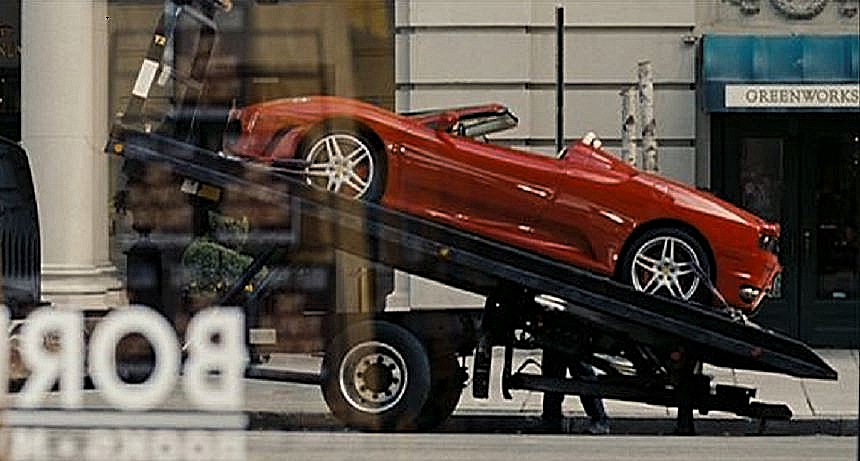
Abigail, meanwhile, finds herself dragged along the quest (although not literally this time) by his ex-boyfriend’s insistence for her help and the residual feelings she still has for him. Good old fashioned drama…hooray.
Fortunately this movie, like last time, keeps it to a minimum and only while something else is happening. Remember what I said about pacing and the importance of strategic dialogue scenes? This sequel absolutely maintains that, and it definitely saves its butt many times over. I realize some people are interested in Ben and Abigail’s relationship, but if it had been more of a focus than it was, at risk of slowing down the plot, they could’ve lost a lot of people.
Most importantly to the integrity of this film, it takes advantage of real historical legends and events to assemble the plot. This includes Cibola, the Inca lost city of gold, as the treasure itself, and linking it to the American Revolutionary War, along with the construction of Mount Rushmore, the resolute desks, and several others as well. As per the usual with this type of thing, there is some inaccuracies, such as Britain’s support of the Confederation, but none that is major enough to ruin the immersion of the film. You never know, maybe there is a secret book for President’s eyes only, how could we disprove it?

So there you have it. I’m not trying to argue that these are absolutely revolutionary pieces of media, but trying to write it off as ‘cheesy’ or ‘highly improbable’ and calling it a day is a lazy miscalculation. There’s a reason these movies made millions and are still loved by so many to this day.
Of course, there is no legend greater than the existence of the third movie in this series, which has been through development hell and back. While it seems unlikely that we will ever see it at this point, as I’ve previously mentioned, there is a serialized show on Disney+, set fifteen years later. If you’ve never heard of National Treasure: Edge of History before today, you’d be forgiven, because there wasn’t a lot of fanfare around it. Why? Once again it can be summarized in two words: Nicolas Cage. He isn’t there. This show follows a different cast, a bunch of young adults fitted around a handful of stereotypes and full to the brim with youthful drama. Doesn’t that sound appealing?
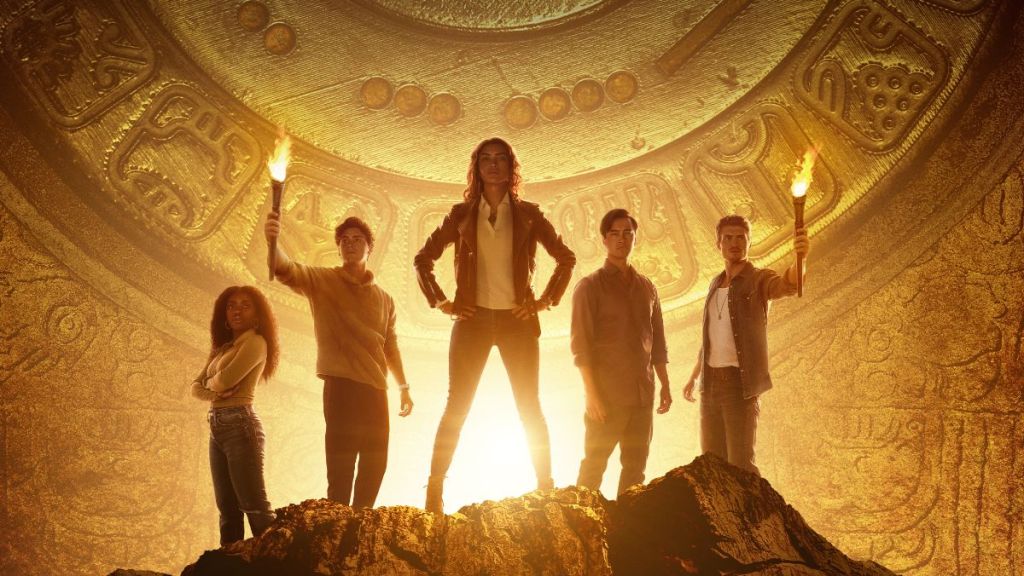
All right let’s break it down.
- Fusion of “Young Adult Energy” and National Treasure formula
So, to be clear, while the lack of retention from old fans is definitely because of Cage’s absence, I don’t think said fans would enjoy this show even if you could convince them to watch it. It’s important when rebooting or continuing something that you know what made fans like it in the first place. Disney apparently thought that if they mangled the National Treasure formula with Young Adult stuff like ‘hip’ music, ill-founded romance, trend-ism, and of course, drama, they could net all audiences. That’s not exactly how it works, and I don’t think I need to spell that out.
The fact that at times the music sounds great and a perfect follow up to the past movie’s score (especially with the opening credits at the beginning of every episode, which was actually marvelous) really sucks because you know eventually you’re going to get some horrible hip hop song that is completely tone-deaf to what is going on. And that is as good of a analogy for what is happening in the story itself as I could ask for. I suppose that is what music is supposed to do, so good job Mr. Rabin…I guess? Or whoever was behind that decision.
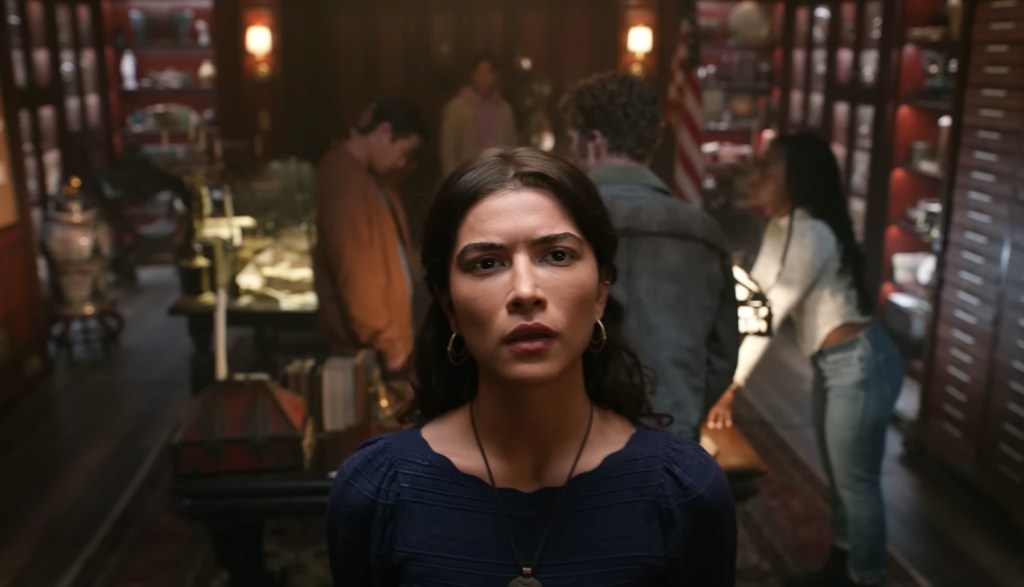
In any case the National Treasure formula truly is just copy and pasted into a Gen Z template, and it does not work at all. We go from watching the lead character Jess Morales (shown below) solve a kindergarten-level clue to worrying about her relationship with the recurring Liam Sadusky and friend-zoned Ethan Chao, or Riley-replacement Oren Bradley whining about how he scuffed his air force ones. I’m not saying that these things don’t have a place somewhere in the streaming world. I’m sure someone has a liking for this kind of drama, but this isn’t what NATIONAL TREASURE fans would watch or give two cents about.
If against better judgement someone decides to watch this train wreck, this problem is probably one of the first things they’ll pick up on. And sadly, it will be far from the last.
2. Horrendous Pacing Throughout
So, flashback to when I said the National Treasure movies mastered pacing, and prepare to completely chuck that out of the window. I haven’t seen a story with this bad pacing before… ever. I am sure there are worse ones out there, but this is the roughest I’ve witnessed to date. The poor writing quality that tails every dialogue scene is definitely a frontline contributor to that, but it is how that effects a multi-episode length plot that really causes the issue.
The examples I shared about Jess, Ethan, and Oren can all be seen as soon as the second scene of the show. They are inside of a prison escape room, with the storytelling purpose of showing how amazing Jess is at solving puzzles, (because apparently they couldn’t come up with a less on the nose way of going about that) and the scene is literally made up of comments of this nature. The other character I have yet to mention, social justice warrior Tasha Rivers, immediately interrupts the plot to make a comment about how hot the prison warden looks. And this is the ENTIRE show. A series of strewn together plotlines that are filled in with useless one-liners or completely pointless conversations. Those need to be woven in with the story seamlessly, and should always serve some sort of purpose. The dialogue should be relevant, and lead the story somewhere. But that is as rare in Edge of History as discovering a real world mythical treasure.
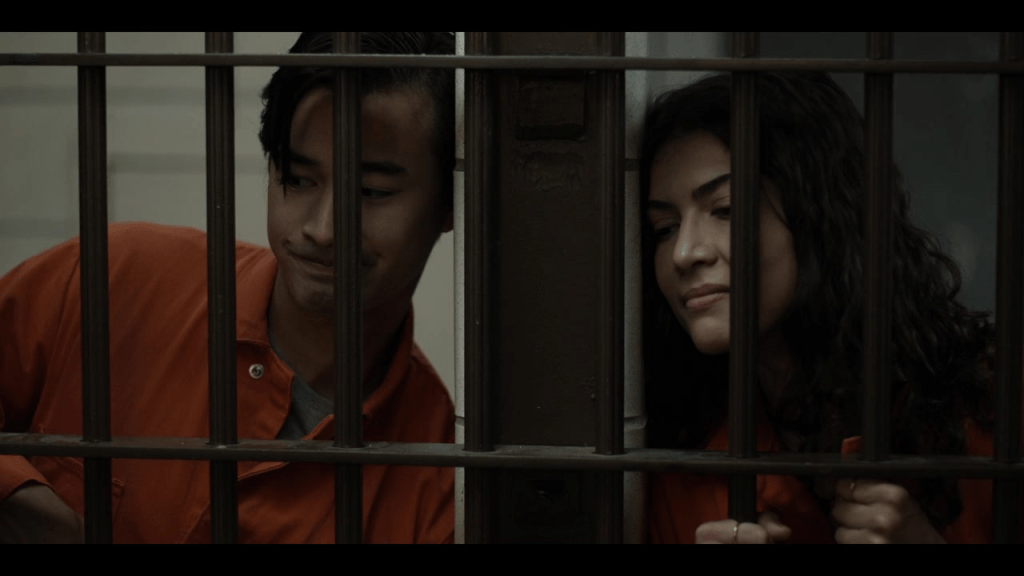
So, as you can imagine, once this is spread over an entire plot, it moves insanely slow. This is one of those scenarios where the show would’ve benefitted a lot from being a movie instead. There just isn’t enough material here to make a serialized story over ten episodes. Some scenes, like when Jess is breaking out of an actual prison with her father, who, retroactive spoiler alert, was thought to be dead, are actually kind of fun and interesting. But those are really spread few and far between and rarely don’t have something wrong with them.
3. Abstract/Questionable Use of History
With history being a critical part of the movies, naturally its usage in Edge of History will really help or hinder it. And, well, it’s not the prior. The opening scene of the show, the one that takes place directly before the escape room one, follows the franchise trend of starting with the historical context to the treasure that will serve as the backbone of the story. And…I’m just going to say it like it is, you can tell what year this was cooked up in. The basic idea is that it is set around the Spanish invasion of the meso-American tribes (i.e. the Aztecs, Incas, and Mayans), and while they failed to survive against the evil colonizers, the women of the tribes managed to smuggle away and hide all their cultural artifacts and treasure away, and the clues leading to it were left in three plot-convenient boxes that have been allegedly lost to history.
As you can tell, Edge of History is living up to its name. The treasure itself is not based off of any specific legend as far as I can tell, which definitely does not help the immersion that was already tricky for some people to get into. And the inaccuracies from this point onwards start getting a little more front and centre than in the movies. First of all, the idea that these ancient tribes interacted as much and as non-violently as they did in the show directly goes against what we know to be history. I get that this is supposed to be a fictional plotline for sake of entertainment, but the movies got the balance of something having the possibility of being reality, where as this saw that line and used it as the launching point for a parachute jump.
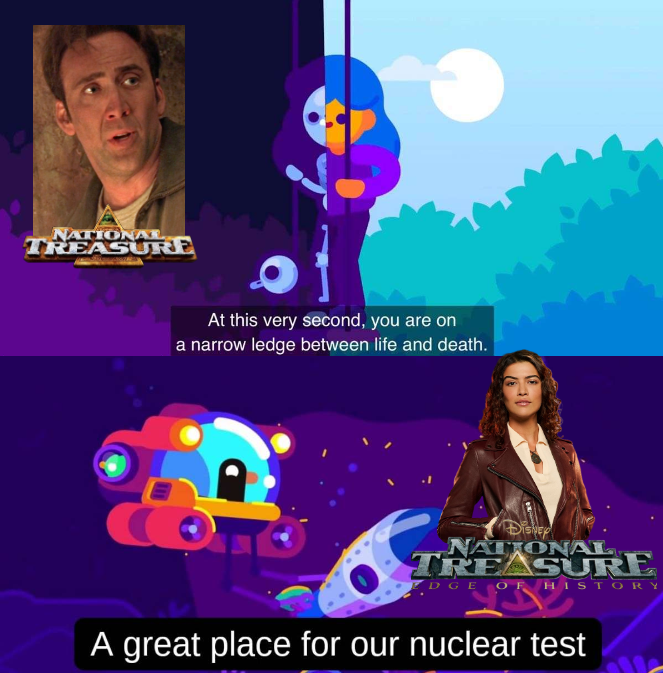
Jumping to the discovery of the treasure, an area which would have been constructed by the Aztecs, we find that the wheel is a central part of a lot of the gimmicks that cause problems for our characters. And, well, some basic historical research will expose the fact that, as far we know, the Aztecs never discovered the wheel. Considering that is kind of a big thing, we can pretty comfortably say that we are right about it. There is also another plot point about clues in one of Lewis’ journal that was left behind by Sacagawea, and that is also an issue since she more than likely did not know how to write English. Especially on the level where it would blend in with Lewis’ writing.
Besides direct breaks with history though, the plot in general replaces little tidbits of history snuck in by amazing writers to political statements Disney wants to make. The end result is the systematic dismantlement of the National Treasure foundations. Whether you agree with Disney’s statements or not is irrelevant, they do not have a place in this formula, and the massive criticism this show has gotten from the few viewers that have watched it is a testament to that.
4. Terrible Villains
Admittingly, National Treasure has never been known for having the best villains on the market, but these are exceptionally bad. Allow me to introduce you to the big baddy of the series, Billie Pearce, played by Catherine Zeta Jones, although you wouldn’t be able to tell with how she looks in this show.
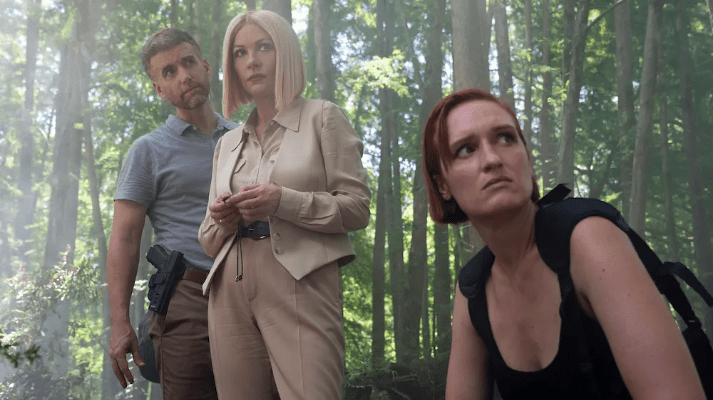
The other red-headed woman she is with is partnered up with a short-lived male accomplice, (not the one in the picture) and both of them have the most one-dimensional flat acting I have ever seen in my life. Now, I have a habit of not coming after actors for their work, so I’m willing to say it was likely the direction and writing of the show at fault here, but I can definitely tell they either had no clue what to do with their characters or did not care, because this was obscenely bad.
In any case these bozos are introduced with absolutely no subtilty in mind, as the music and tones of voices are so painfully direct it makes me want to just stop writing about them and do literally anything else. Which I have already done in the making of this blog way too many times. While the show eventually tries making us think a bit, it always feels like they are trying to hold our hands as if we are in the third grade. Which really starts to feel like the target audience as you push through the show.
You see, Jess’s previously mentioned love interest, Liam Sadusky, is played as a bit ambiguous. Is he safe? Is he dangerous? Is he saf-, no he’s a villain, no actuall-. This goes on for so long and it is so abundantly clear what they are trying to do that it is just so dull. Nothing about it feels like it is targeted towards people that would be old enough to remember the films at all. So, what exactly was the game plan here? Seriously, what in the seven circles of colonizing were you thinking Disney?

5. Bad Connection to the Franchise
This point is mildly redundant, since I already covered the lack of Nicolas Cage. That being said, this problem goes a little bit deeper than that. You might observe I chose the word “bad” instead of something like “poor”. And that is because Edge of History‘s connection to the franchise is overtly bad.
The characters that do return are shoehorned in very roughly in my opinion. The reality is that they should have created a National Treasure 3 with the original cast and then weaved the new younger cast into the movie, and then created the show with them after that. I have no doubt in my mind that Edge of History would have done a million times better if Nic Cage aka Ben Gates had passed the torch onto these guys. Even if this show still sucked as much as it does now, it would have seen much better metrics than it got. But no, apparently that’s not what Disney decided to do.
Instead, we get Peter Sadusky as the first familiar face, who was nothing more than a side character in the movies (he was the FBI leader that was hunting Ben down in the first film and verified that the president’s secret book exists in the second). And his role is nothing more than to give the previously explained exposition for the treasure. And then give that information through a series of random events to Jess so she could spend a couple episodes before committing to it (remember this show is paced perfectly). Oh yeah and then he’s murdered after that by mysterious circumstances. Gee, I wonder if it’s the not obvious at all villain of the film.
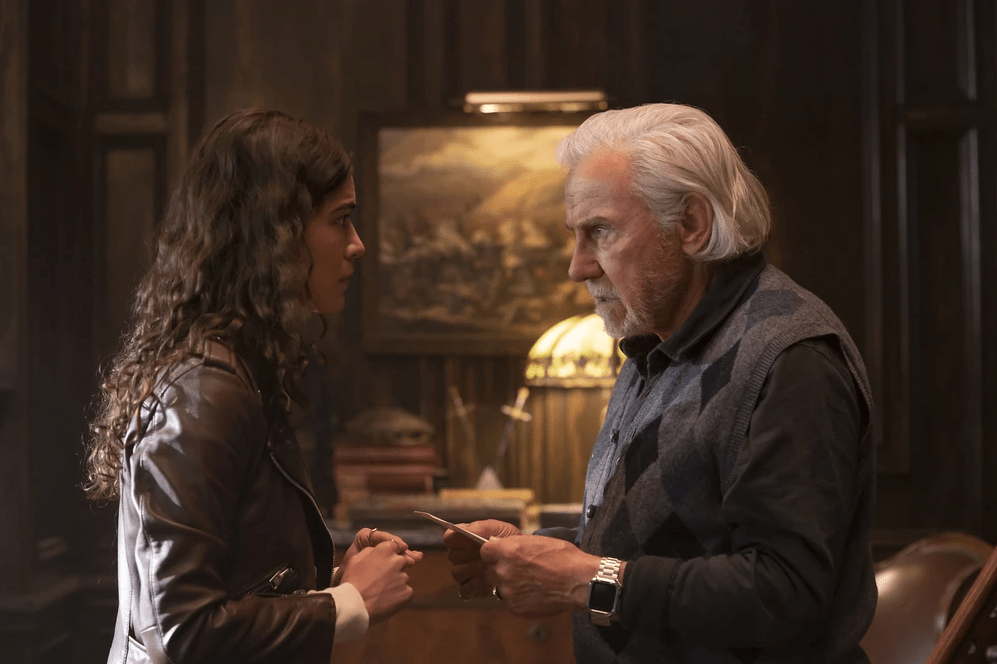
This sets up a number of arcs, one of which is a different FBI agent who randomly becomes a main recurring character of the film all the way to the final episode. And we will get back to said arc later. It gets a whole lot worse.
The next face we will recall is none other than our amazing Riley Poole. When I finally saw him showing up on my screen I will admit I was bit hopeful that the show would turn out decent. But this isn’t until episode four, and he does not show up again for the rest of the show. He does tease a couple of potential plot points for another movie with the main cast but considering how this show has been cancelled I doubt Disney will ever do anything with this franchise again.
Something that happens in the episode that I do like is how the “passing of the torch” I previously mentioned does happen to some degree as once him and Jess get out of a predicament they find themselves in (it really isn’t anything that exciting you can watch the episode if you haven’t already) Riley states that he sees in Jess what he saw in Ben. This was exactly the type of thing I was after. So then, why is it only happening in the fourth episode? And why does nothing else of merit happen with this concept? Lord only knows.
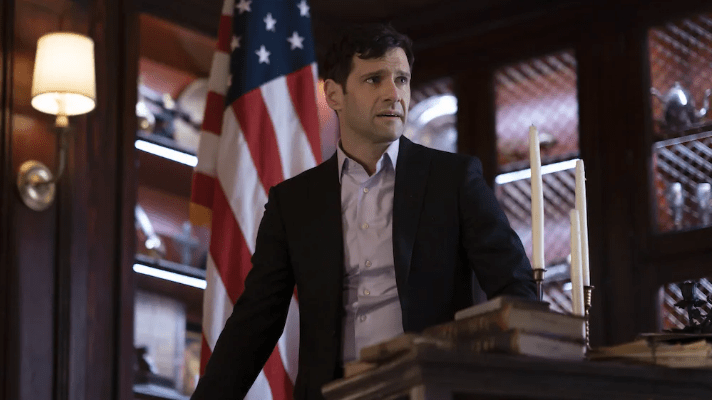
Regardless, none of this is what really grinds my gears about this show’s presence on the franchise. That is reserved for a different familiar face. Though it may take some time to recall. For those that haven’t watched the show but have seen the movies, did the person on the far left of the villain picture ring a bell?
If it didn’t, that is because he is the very definition of a side character from the movies: an assisting FBI agent to Sadusky named Hendricks. He was the dude that said “yeah uh we got a tip a few days ago that someone was going to steal the Declaration of Independence”. He’s back, and originally he is just a neat reference to said films to our new random main FBI character. But then of all a sudden, because Disney decided there wasn’t enough plot twists that made no sense, he becomes the ultimate villain of the film. Apparently, all along for the past few decades this guy has been someone named Salazar who has been after the indigenous treasure with the goal of destroying it so that his white narrative on history stays validated or some such. I know I sound like I’m embellishing here but that is actually what happens.
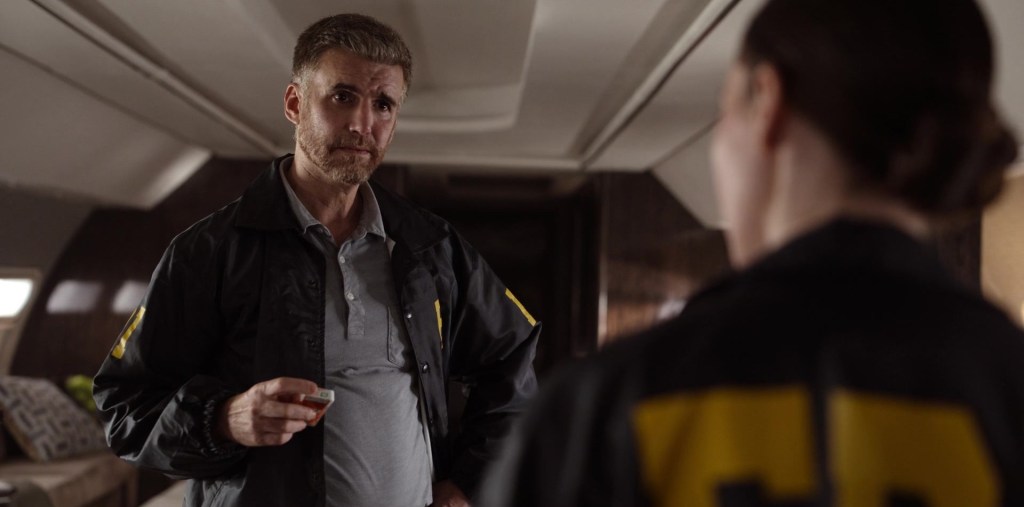
When you get to the point where you can’t even accept the show as canon because it messes stuff up with the original narrative, you know things have gotten really bad. I always find it interesting when something that was definitively amazing gets a sequel or continuation that is just an absolute disaster. I’ve seen it happen more than once.
Let this be a reminder to us all: something is not always better than nothing.
 Joel Peters
One thought on “Edging out Edge of History: A National Treasure Retrospective”